 English
 Español
 中文简体
中文简体 русский
Double Lever Padlocks: Is the Locking Mechanism More Secure
Padlock security is often associated with body material and shackle thickness, yet the internal locking mechanism deserves equal attention. A Double Lever Steel Padlock uses a dual locking arrangement that secures the shackle at two points rather than relying on a single engagement point. This structural difference can change how the lock responds to pulling, prying, and other forms of physical force.
Double lever does not mean that every padlock with this mechanism provides the same security level. Body construction, shackle hardness, cylinder design, and manufacturing tolerances still influence the complete performance. The locking mechanism simply adds another important layer to the design.
What Does a Double Lever Mechanism Actually Do?
Traditional padlocks may hold the shackle at a single locking point. Dual-lever designs can engage both legs of the shackle, creating two internal contact points. Product specifications from several commercial padlocks describe dual steel levers that independently lock each shackle leg.
- Two locking points: Both sides of the shackle receive mechanical support after the lock closes.
- Better force distribution: Pulling or twisting forces can be transferred through two engagement areas.
- Greater pry resistance: Dual engagement can make it harder to separate the shackle through leverage.
- Secure shackle retention: Both shackle legs remain mechanically connected to the lock body.
Technical descriptions of double-locking systems similarly explain that internal mechanisms engage both sides of the shackle and provide greater resistance than single-locking arrangements.
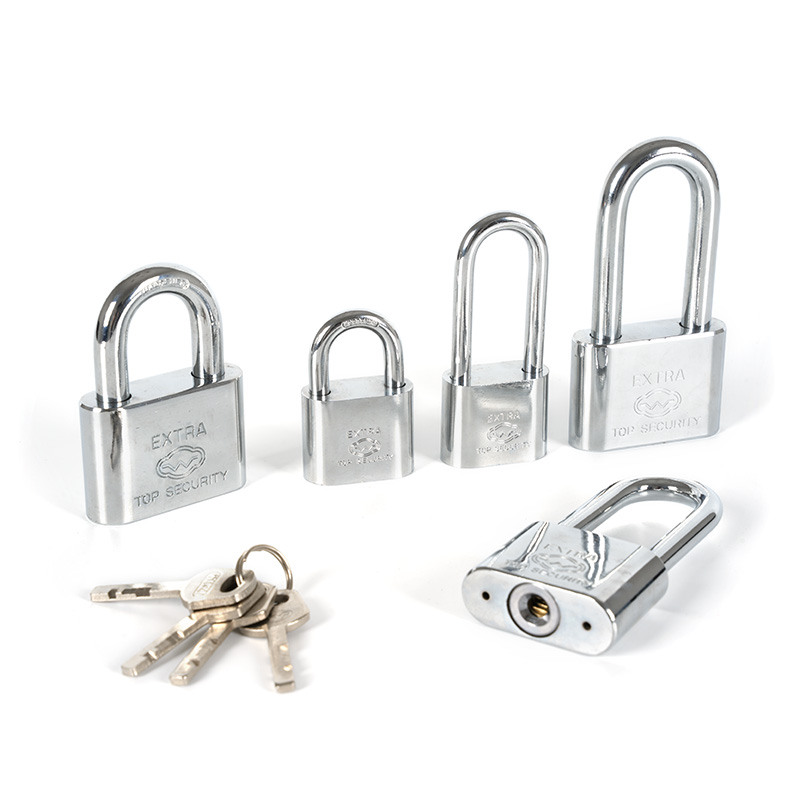
Why Does Steel Work Well With Dual Locking?
Steel is frequently used for padlock bodies and shackles because it can provide substantial mechanical strength within a compact design. Laminated steel padlocks, for example, may combine a steel body with a hardened steel shackle and a double locking mechanism.
The combination becomes particularly useful around gates, lockers, toolboxes, storage cabinets, fences, and commercial access points where the lock may experience repeated physical contact.
Body Construction
A laminated or reinforced steel body can consist of multiple steel plates joined into a compact housing. This construction provides a substantial enclosure around the cylinder and locking components while keeping the overall dimensions manageable.
Shackle Construction
The shackle remains exposed during normal operation, making its material important. Hardened steel shackles are commonly used to improve resistance against cutting and sawing. Some commercial models specify an 8 mm shackle diameter, while larger designs can use diameters around 11 mm.
Does Double Locking Help Against Pry Attacks?
This is where the mechanism becomes particularly relevant. A single locking point can leave the shackle dependent on one internal engagement area. Dual levers create support on both sides, requiring external force to overcome two locking interfaces.
Commercial padlock documentation describes double-locking systems as providing additional resistance against prying. Some designs use dual steel levers, while others use ball-bearing locking arrangements to secure both shackle legs.
- Gate applications: Dual locking can provide additional resistance around hasps exposed to pulling forces.
- Storage lockers: The mechanism helps keep the shackle firmly seated during repeated opening and closing.
- Toolboxes: Compact steel bodies and short shackles can create a stable locking package.
- Commercial doors: Double engagement can complement heavy-duty hasps and reinforced fittings.
What Role Does the Cylinder Play?
Double levers primarily strengthen shackle retention. They do not automatically improve cylinder security. A complete Double Lever Steel Padlock therefore benefits from a properly designed key cylinder as well.
Commercial steel padlocks may use four-pin or five-pin precision cylinders. Some products combine a five-pin brass tumbler cylinder with a hardened shackle and double locking mechanism.
- Pin configuration: Additional pin positions can create a more complex key combination.
- Cylinder material: Brass cylinders are common in steel padlock designs.
- Key control: Keyed-alike options can allow several locks to operate with the same key.
Does a Double Lever Padlock Fit Every Application?
Not necessarily. The locking mechanism needs to work with the surrounding hardware. Shackle diameter, vertical clearance, horizontal clearance, body width, and hasp thickness all affect compatibility.
Compact models may use a body around 45 mm wide with an 8 mm shackle, while heavier versions can reach approximately 54 mm body width with an 11 mm shackle.
A short-shackle design can reduce exposed space around a close-fitting hasp. Longer shackles provide additional clearance for thick gates, chains, and larger mounting points. The correct configuration depends on the installation rather than body size alone.
Is the Locking Mechanism More Secure?
The answer is generally yes from a mechanical standpoint, but the advantage should be viewed as part of the complete padlock construction. Dual levers can provide stronger shackle retention than a single locking point, particularly against prying and pulling forces.
Still, a strong locking mechanism cannot compensate for a weak shackle, vulnerable cylinder, poorly matched hasp, or thin lock body. Security comes from the interaction between these components.
Final Takeaway
A Double Lever Steel Padlock gains its practical security advantage from how the shackle is retained. Two independent locking points can distribute physical forces more effectively and provide additional resistance against prying and other forms of forced movement.
Buyers evaluating this type of padlock should examine the complete specification: steel body construction, shackle diameter, hardened-steel grade, cylinder configuration, clearance dimensions, and dual-lever design. A balanced combination of these elements makes the locking mechanism far more meaningful than the term “double lever” alone.
Double Lever Padlocks: Is the Locking Mechanism More Secure
High Security Padlock Factory
Copyright © Zhejiang Pujang Wushi Locks Co., Ltd. All Rights Reserved.
