 English
 Español
 中文简体
中文简体 русский
Square Blade Iron Padlocks: Does Shape Add Security
Padlock security depends on more than material thickness or key design. Body geometry also affects how a lock sits against a hasp, chain, gate, or door fitting. This is why the square profile found on a Square Blade Iron Padlock attracts attention from buyers looking for a compact but sturdy locking solution.
Square construction does not automatically make a padlock impossible to defeat. However, its geometry can influence contact area, tool access, shackle exposure, and overall stability. Those details become important during real-world use.
How Does a Square Body Influence Physical Security?
Round padlock bodies allow tools to move around the surface more easily. A square body presents flatter sides and defined corners, creating a different physical profile around the locking mechanism.
- Broader contact surfaces: Flat sides can sit firmly against compatible hasps and mounting points.
- Compact geometry: A short, wide body can reduce unnecessary movement after the lock is attached.
- Reduced body rotation: A squared profile may make the lock less convenient to twist around a fitting.
- Defined shackle position: Body dimensions help determine how much of the shackle remains exposed.
These characteristics can improve the physical relationship between the lock and the hardware it secures. The actual security level still depends heavily on the shackle, cylinder, internal locking system, and manufacturing quality.
Which Components Matter Beyond Shape?
Square geometry provides only part of the security equation. A properly designed Square Blade Iron Padlock normally combines several components to create a stronger locking assembly.
1. Iron or Steel Lock Body
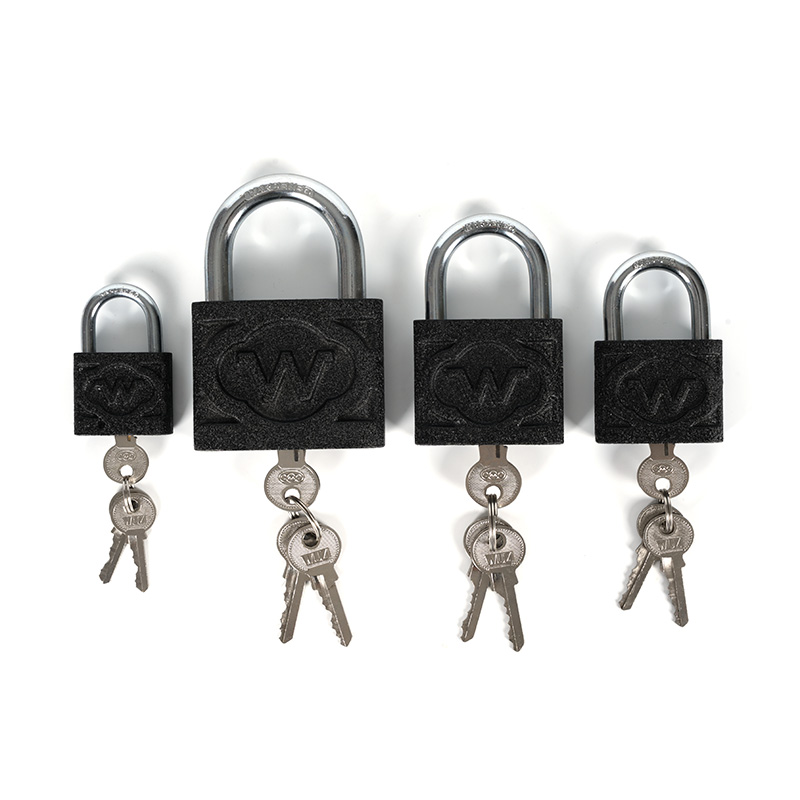
Iron-bodied models are commonly used for gates, doors, storage areas, lockers, workshops, and general commercial applications. Available products include 40 mm, 50 mm, and 60 mm body sizes, giving buyers different options for hasp dimensions and installation space.
2. Hardened Steel Shackle
The shackle often receives greater attention than the body because it remains exposed during use. Hardened steel construction can provide better resistance against cutting and sawing compared with softer metals. Some square iron padlocks combine a solid iron body with a hardened steel shackle for this reason.
3. Locking Mechanism
Internal construction can vary considerably. Pin tumbler systems, disc mechanisms, and double-ball locking arrangements appear across square iron padlock designs. Some models use double locking to increase resistance against pulling or prying forces.
Does a Larger Square Padlock Always Provide Better Protection?
Size needs to match the hardware rather than simply becoming larger. A 60 mm body may provide a substantial physical structure, yet its dimensions could be inconvenient on a narrow hasp or compact locker fitting.
- 40 mm: Suitable for compact gates, lockers, toolboxes, and smaller hasps.
- 50 mm: Offers a larger body for general commercial and outdoor applications.
- 60 mm: Provides additional body mass for larger gates, shutters, storage areas, and heavier fittings.
Actual dimensions vary by manufacturer, so body width, height, shackle diameter, clearance, and weight should be checked together rather than judged from the nominal size alone.
Where Does Square Geometry Make Practical Sense?
Square padlocks can be useful around locations where the lock needs to remain relatively stable against a flat mounting surface. Gates, shutters, storage cabinets, workshops, warehouses, and outdoor utility areas are common applications. Product listings also show square iron designs being used across residential, commercial, and industrial settings.
Security comes from the complete construction rather than shape alone. A square body can provide useful structural characteristics, but the shackle material, locking mechanism, cylinder design, body thickness, and compatibility with the hasp all deserve equal attention.
Final Takeaway
So, does shape add security? Yes, but indirectly. The square profile can improve stability and create a compact physical barrier around the locking system. It cannot replace a hardened shackle or a reliable internal mechanism.
For buyers comparing padlocks, the smarter approach is to evaluate the entire construction: body dimensions, shackle diameter, locking method, key system, surface treatment, and intended application. A well-engineered Square Blade Iron Padlock can then provide a balanced combination of physical strength, practical fit, and everyday security.
Square Blade Iron Padlocks: Does Shape Add Security
High Security Padlock Factory
Copyright © Zhejiang Pujang Wushi Locks Co., Ltd. All Rights Reserved.
