 English
 Español
 中文简体
中文简体 русский
Can Every For Sale High Quality Padlock Be Trusted
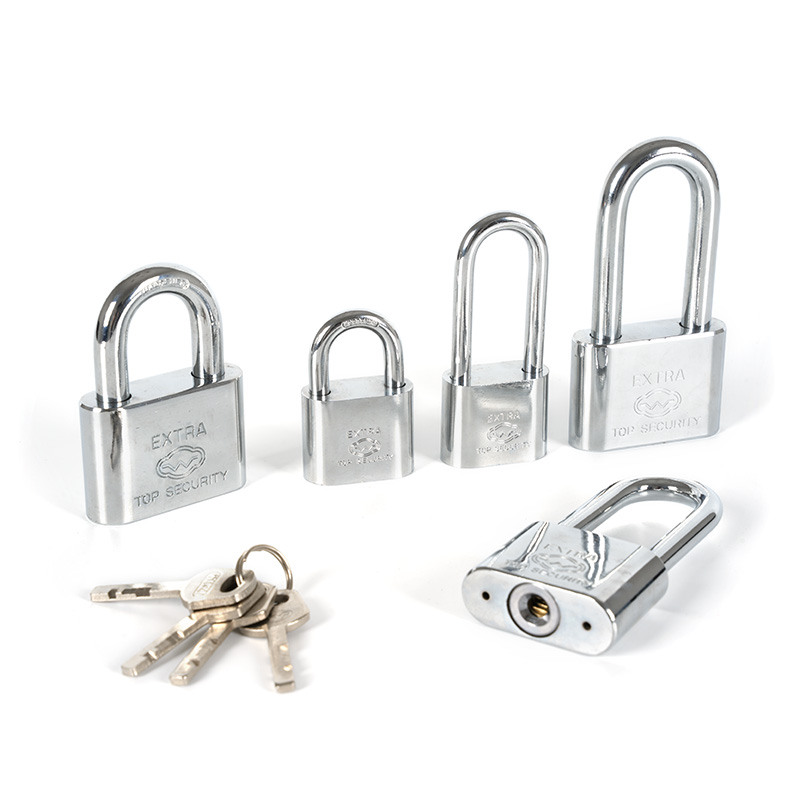
A padlock advertised as “high quality” often creates an assumption of dependable protection, yet real reliability varies significantly across the market. A For Sale High Quality Padlock may differ in internal engineering, material integrity, and test validation even when the external appearance looks identical. Security performance is determined by measurable construction details rather than product labeling or visual heaviness.
1. Marketing Claims Versus Real Protection Level
Product listings frequently use broad terms such as “high security” or “heavy duty,” but these descriptions are not standardized across manufacturers.
Important realities:
- No universal rule defines “high quality” in retail listings
- Appearance can be identical between weak and strong locks
- Internal mechanism quality is rarely visible to buyers
- Some products rely on visual weight instead of structural strength
Industry guidance highlights that certified ratings such as EN12320 or ASTM F883 provide far more reliable benchmarks than promotional wording .
A lock may look solid externally while still being vulnerable to basic cutting or drilling attacks.
2. Internal Structure Defines True Security Behavior
The real performance of a padlock depends on its internal architecture rather than exterior design.
Core components include:
- Lock cylinder assembly
- Spring-loaded pin system
- Shackle locking bearings or dogs
- Anti-drill reinforcement plates
Even tiny machining variations can affect function. Precision tolerances often remain within 0.02–0.05 mm range in quality-controlled production.
Weak internal construction may cause:
- Key jamming under cold or humid conditions
- Reduced resistance against manipulation
- Early wear of internal springs
- Inconsistent locking pressure across units
Security failure often begins inside the cylinder long before visible damage appears.
3. Shackle Integrity Determines Attack Resistance
The shackle is usually the more exposed and targeted component during forced entry attempts.
Typical engineering ranges:
- Diameter: 6 mm to 14 mm depending on security class
- Material: hardened steel, boron alloy steel, or stainless steel
- Hardness levels: commonly HRC 50–60 after heat treatment
High-strength materials such as boron alloy steel significantly improve resistance against cutting and grinding tools .
Structural design also plays a role:
- Shrouded shackles reduce tool access
- Double locking mechanisms distribute force evenly
- Short shackle clearance limits leverage attacks
A visually thick shackle without proper heat treatment can still fail quickly under stress.
4. Cylinder Resistance Against Manipulation Tools
Cylinder design is often underestimated but directly influences lock survivability.
Common configurations:
- 4-pin systems for basic protection
- 5–6 pin systems for increased key variation and improved security
- Anti-drill plates for tool resistance
- Anti-bump structures for impact resistance
High-precision cylinders rely on tight alignment between pins and shear line. Even microscopic corrosion or debris can disrupt smooth operation over time.
Security-focused designs also introduce restricted keyways to reduce unauthorized duplication risks.
5. Environmental Durability and Long-Term Stability
Outdoor conditions can degrade padlock performance even without physical attack.
Key environmental risks:
- Moisture entering keyway and causing internal corrosion
- Salt exposure accelerating metal degradation
- Temperature fluctuation affecting lubrication stability
Rain and humidity gradually damage internal springs and pins, reducing reliability long before external rust becomes visible .
Material selection improves durability:
- Stainless steel performs well in coastal environments
- Brass resists corrosion but offers moderate strength
- Coated steel improves surface protection but requires internal quality control
6. Batch Consistency and Production Control Differences
Even within the same product listing, consistency may vary depending on manufacturing control.
Critical production factors:
- Heat treatment uniformity across shackles
- CNC machining accuracy of lock housing
- Cylinder assembly torque calibration
- Pin alignment precision during mass production
Higher-grade factories apply destructive sampling tests such as:
- Pull-force resistance evaluation
- Cutting simulation testing
- Key endurance cycles (often exceeding 5,000–10,000 operations)
Without consistent process control, identical-looking locks may perform differently under identical stress conditions.
7. Security Reality Versus User Expectation
A common misunderstanding is that padlocks are absolute barriers. In reality, they function as delay-based security devices.
Observed behavior in real-world scenarios:
- Low-quality locks fail quickly under simple tools
- Medium-grade locks resist casual attack but not determined force
- High-security locks extend attack time significantly
The effectiveness of a padlock often depends on how much time and effort it forces during an intrusion attempt rather than absolute invulnerability.
Can Every For Sale High Quality Padlock Be Trusted
High Security Padlock Factory
Copyright © Zhejiang Pujang Wushi Locks Co., Ltd. All Rights Reserved.
