 English
 Español
 中文简体
中文简体 русский
Is Every For Sale High Quality Padlock Reliable
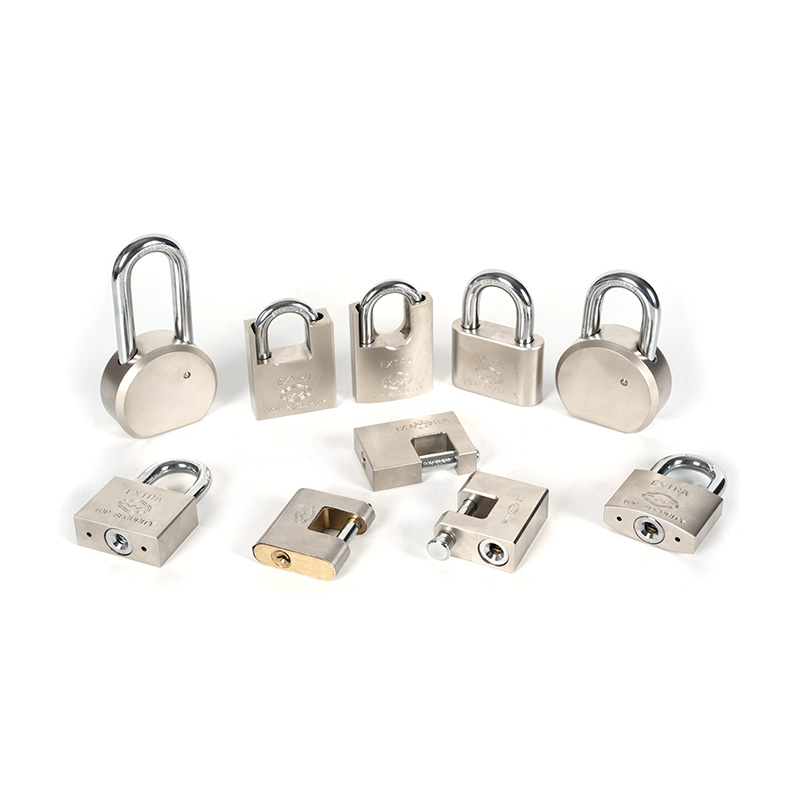
The market is full of padlocks labeled as “high quality,” yet real-world performance often varies widely. A For Sale High Quality Padlock does not automatically guarantee strong resistance against cutting, picking, or environmental wear. Reliability depends on internal engineering, verified testing, and manufacturing discipline rather than marketing description.
1. Label vs Engineering Reality
Many padlocks are promoted with terms like “heavy duty” or “high security,” but these phrases are not standardized.
Key observation points:
- No universal protection level behind marketing wording
- “High quality” may refer only to surface finish
- Internal mechanism strength often not disclosed
- Some products use soft metals despite strong appearance
Industry sources highlight that real security depends on certified standards such as CEN or ASTM ratings, not product naming alone.
A visually solid lock may still fail under basic bolt cutter pressure if the shackle material is not properly hardened.
2. Material Composition Determines True Strength
Padlock durability is heavily influenced by the internal material structure, not external coating.
Common materials and their real behavior:
- Brass body: corrosion resistant, moderate physical strength
- Hardened steel: strong resistance against cutting and impact
- Stainless steel: balanced performance in humid or marine environments
- Zinc alloy: cost-efficient but lower structural endurance
High-quality industrial locks often rely on hardened boron alloy steel shackles, which significantly increase resistance to sawing and leverage attacks .
A common issue in low-reliability products is inconsistent heat treatment, which creates uneven hardness within the same batch.
3. Cylinder System Is the Hidden Security Core
The locking cylinder is the more sensitive component in determining reliability.
Typical technical differences include:
- 4-pin systems for basic access control
- 5–6 pin systems for improved key variation and anti-pick resistance
- Anti-drill plates to slow forced entry tools
- Anti-bump pin structures in advanced designs
Precision tolerance inside the cylinder is often within 0.02 mm range. Small deviations can affect both smooth operation and resistance to manipulation.
Some lower-cost “high quality” products still use simplified pin layouts that reduce key complexity and increase vulnerability.
4. Shackle Weak Points Are Often Overlooked
Even a strong body cannot compensate for a weak shackle.
Key structural factors:
- Diameter range usually 6 mm to 14 mm
- Hardened steel or alloy steel required for high resistance
- Heat treatment determines hardness level (often HRC 50–60)
- Double locking mechanism improves resistance to pulling forces
Shackle access geometry also matters. Open designs allow tools easier entry, while shrouded structures reduce cutting leverage space.
A misleading situation occurs when a thick-looking shackle is made from low-grade steel, which performs worse than a thinner but properly hardened alloy version.
5. Surface Protection Does Not Equal Security
Many products emphasize plating or coating as a quality signal, but surface appearance can be misleading.
Common coatings include:
- Chrome plating for visual appeal
- Nickel coating for basic oxidation resistance
- Plastic sheathing for weather protection
These layers help with corrosion resistance but do not significantly increase resistance to physical attack.
Salt spray testing in industrial environments often reveals that internal springs or pins corrode earlier than external shells, causing failure even before visible rust appears.
6. Testing Standards Separate Real Quality from Claims
Reliable padlocks are validated through controlled testing environments.
Typical evaluations include:
- Pull-force resistance tests
- Cutting simulation using standardized tools
- Drill resistance evaluation
- Key cycle durability testing (often 5,000–10,000 cycles)
International standards such as EN12320 or ASTM F883 define measurable thresholds for security performance.
Products without third-party certification may still function well, but performance consistency becomes unpredictable across batches.
7. Batch Consistency and Manufacturing Control
Reliability is not only about design—it also depends on production stability.
Important control factors:
- CNC machining accuracy for lock body cavities
- Uniform heat treatment across shackles
- Pin alignment consistency inside cylinders
- Torque-controlled assembly processes
Factories with weak quality control may produce units with identical appearance but different internal resistance levels.
This explains why two locks from the same listing can behave differently under stress.
Is Every For Sale High Quality Padlock Reliable
High Security Padlock Factory
Copyright © Zhejiang Pujang Wushi Locks Co., Ltd. All Rights Reserved.
