 English
 Español
 中文简体
中文简体 русский
Manufacturing Processes and Common Lock Types
How Iron Padlocks Are Made in Chinese Factories
Chinese manufacturers iron padlocks primarily through two methods: die-casting and stamping. Die-cast padlocks are made by injecting molten iron (typically gray iron or malleable iron) into a steel mold at temperatures of 1,300-1,450°C. The resulting lock body has a smooth surface, consistent thickness (within ±0.3 mm), and can incorporate complex shapes such as logos or decorative patterns directly into the casting.
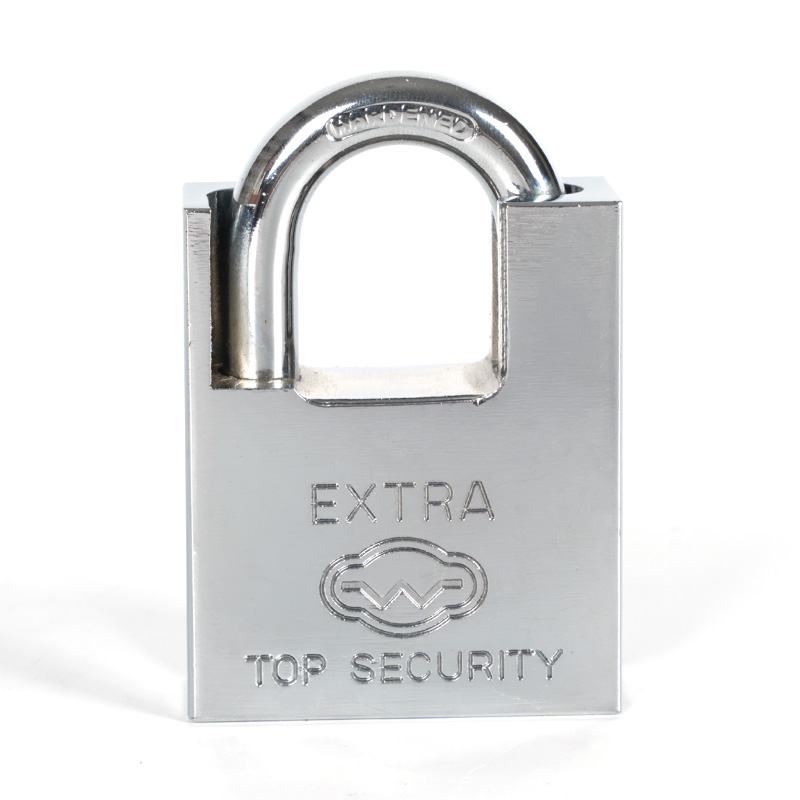
Die-cast locks account for approximately 60-70 percent of Chinese production. Stamped padlocks are made by pressing flat iron sheets (1.5-3.0 mm thickness) into halves, then welding or riveting them together. Stamped locks are lighter (20-30 percent less weight for the same external dimensions) and less expensive, but the hollow body is weaker and easier to pry open. A typical die-cast padlock body can withstand 2,000-3,000 N of prying force; a stamped body withstands 500-1,000 N. The internal locking mechanism consists of a cylinder (brass or zinc alloy), pins (brass or steel springs), and a shackle (hardened steel, 6-10 mm diameter). The distance between the shackle legs (clearance) is 15-25 mm for standard padlocks and 30-50 mm for long-shackle padlocks used on lockers or storage units.
Surface Finishes and Corrosion Protection
Iron padlocks rust if not properly coated. Chinese manufacturers apply several types of surface finishes. Zinc plating (electrogalvanizing) is the most common. The lock body is immersed in a zinc sulfate solution, and an electric current deposits a zinc layer of 5-15 microns. A third option is black oxide (also called gun bluing), which creates a black iron oxide layer (1-2 microns thick). Black oxide provides almost no corrosion protection (50-100 hours salt spray) but has a traditional appearance and is used for locks intended for dry environments or antique-style hardware. The coating thickness is measured with an eddy current gauge; a minimum of 60 microns is recommended for outdoor use. Locks shipped to coastal areas (within 5 km of salt water) should have powder coating or a double layer of zinc plating (15-25 microns). Many Chinese manufacturers offer different coating levels; the buyer should specify the required salt spray hours in the purchase order.
Shackle Hardness and Anti-Saw Properties
The shackle (the U-shaped loop) is the most attacked part of a padlock. Chinese manufacturers use hardened steel for shackles, typically 45# medium-carbon steel (AISI 1045) or 40Cr alloy steel (AISI 5140). The shackle is heat-treated to a hardness of 45-52 HRC for standard security or 52-58 HRC for high-security locks. A shackle with 45 HRC can be cut with a standard hacksaw (18 teeth per inch) in 30-60 seconds. A shackle with 55 HRC takes 2-3 minutes and may dull the saw blade. The shackle diameter is 6 mm for light-duty locks (suitcases, lockers), 8 mm for medium-duty (gates, toolboxes), and 10-12 mm for heavy-duty (warehouses, storage containers). The shackle material also affects resistance to bolt cutters: an 8 mm hardened steel shackle requires 10-15 kN of cutting force (a 600 mm bolt cutter with handles extended to 900 mm). A 10 mm shackle requires 20-25 kN, which exceeds the capability of most hand-operated bolt cutters (maximum 18-20 kN for a 900 mm cutter). Manufacturers test shackle hardness using a Rockwell hardness tester (HRC scale). The test is performed on the shackle straight section, not on the curve, because the curve work-hardens during bending and gives falsely high readings. A certificate of hardness should accompany bulk orders.
Available Types from Chinese Suppliers
Chinese manufacturers produce several main types of iron padlocks. The spring-loaded padlock uses a spring to keep the shackle in the locked position; pressing the lock body opens it. This type is common on mailboxes and lockers. The key-retaining padlock requires the key to be turned to the locked position before it can be removed; this prevents users from leaving the lock unlocked. These are used in safety lockout/tagout procedures. The combination padlock replaces the key cylinder with rotating dials (3-4 dials, each with 10 digits). The number of combinations is 1,000 (3-dial) or 10,000 (4-dial). The internal mechanism uses cam discs and a locking bar made of zinc alloy or brass. Weatherproof padlocks have a rubber or silicone gasket between the lock body and the shackle holes, and a cover over the keyway. They are rated IP54 or IP56 (dust-protected and water-resistant). Magnetic padlocks use magnetic keys and internal magnets (neodymium or ferrite) to retract locking balls. These have no keyhole, so they cannot be picked, but they are vulnerable to strong external magnets. They are used in high-theft areas such as vending machines and cash boxes. Heavy-duty iron padlocks have a laminated body (multiple layers of iron plates riveted together) similar to the design popularized by American Lock. Laminated locks are difficult to cut because the layers separate under a saw blade, causing binding. Chinese manufacturers produce these under OEM agreements for Western brands.
Manufacturing Processes and Common Lock Types
High Security Padlock Factory
Copyright © Zhejiang Pujang Wushi Locks Co., Ltd. All Rights Reserved.
