 English
 Español
 中文简体
中文简体 русский
What Defines Factory High Quality Padlock
Factory-produced padlocks are often judged only by appearance or price, yet real quality comes from internal structure, material engineering, and controlled manufacturing consistency. A Factory High Quality Padlock is not simply a metal lock—it is a precision security component built to resist physical attack, corrosion, and long-term mechanical wear under repeated industrial use.
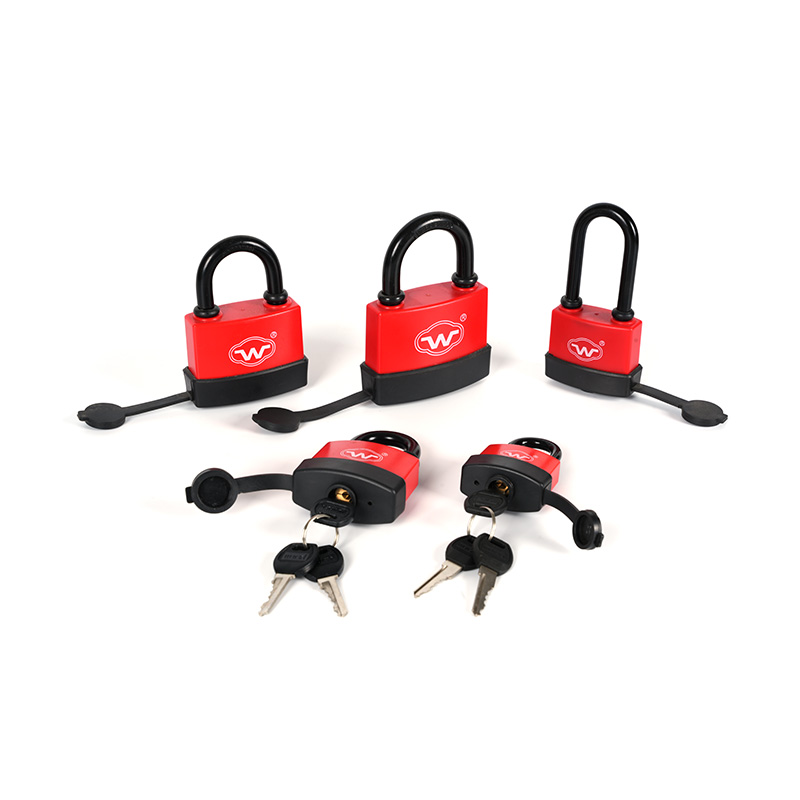
1. Body Material Engineering and Structural Stability
A strong padlock starts with the lock body material. Factory-grade products usually rely on:
- Solid brass bodies for corrosion resistance and machining stability
- Laminated or hardened steel shells for impact resistance
- Zinc alloy or stainless variants for specialty environments
Brass is widely used because it resists oxidation and allows precise cylinder housing alignment. Steel-based bodies increase resistance against hammering and crushing force.
Technical detail examples:
- Brass density: ~8.4–8.7 g/cm³
- Hardened steel tensile strength: often above 600 MPa depending on treatment
- Wall thickness: commonly 3–6 mm in industrial models
Manufacturing consistency is essential. Poor casting or uneven machining can create weak stress points, which directly reduce anti-theft capability.
2. Shackle Design as the Core Defense Line
The shackle is usually the attacked part of any padlock. Factory high-quality models prioritize hardened steel construction with precise heat treatment.
Typical specifications include:
- Diameter range: 6 mm to 14 mm depending on security grade
- Material: hardened steel or boron alloy steel
- Surface treatment: chrome plating or anti-corrosion nano coating
Heat treatment improves hardness, often reaching Rockwell hardness levels around HRC 50–60. This makes cutting with bolt tools significantly more difficult.
Double-ball locking mechanisms are also common in higher-grade factory models, which lock both sides of the shackle instead of one. This reduces leverage-based opening attempts.
3. Internal Cylinder Precision and Anti-Picking Structure
A padlock is only as strong as its cylinder system. Factory high quality designs typically include:
- 5-pin or 6-pin tumbler systems
- Precision-machined brass or alloy pins
- Anti-drill plates or hardened inserts
Some industrial-grade locks adopt anti-bump pin structures to reduce forced opening via impact techniques.
Cylinder tolerances are extremely tight. Even a deviation of 0.02–0.05 mm can affect key rotation smoothness and security alignment.
A stable cylinder system ensures:
- Smooth key insertion
- Consistent rotation torque
- Reduced wear over long-term cycling (often tested to 10,000+ operations in industrial standards)
4. Anti-Corrosion Performance in Factory Standards
Durability testing is a key factor in defining high quality. Factory padlocks are often tested under environmental stress conditions such as humidity, salt spray, and temperature variation.
Common test benchmarks:
- Salt spray resistance: up to 96 hours or more
- Operating temperature range: -20°C to +60°C (industrial models may extend further)
- Coating protection: nickel plating, chrome plating, or ETERNA-type coatings
Corrosion resistance is especially important in outdoor, marine, or industrial gate applications. A lock that rusts internally may fail even without physical attack.
5. Manufacturing Consistency and Batch Control
One major difference between factory-grade and low-cost locks is batch consistency. High quality production lines maintain:
- Uniform shackle hardness across batches
- Identical cylinder pin configuration per SKU
- Standardized assembly torque control
- CNC machining for dimensional accuracy
Factories often implement quality checks such as:
- Shackle pull-force testing (often exceeding 1.5 to 10 tons depending on grade)
- Key cycle endurance testing
- Random destructive sampling per batch
This ensures that thousands of units behave identically under real-world stress conditions.
6. Security Grading and Compliance Indicators
A reliable factory padlock is usually aligned with international standards such as:
- EN12320 security classification
- ASTM F883 cutting resistance benchmarks
- CEN grading systems for physical security strength
Higher-rated models generally combine:
- Thicker hardened shackle
- Reinforced locking mechanism
- Anti-drill and anti-pull structures
These ratings are not marketing labels—they reflect physical test performance against standardized attack methods.
7. Functional Design Details Often Overlooked
Several subtle design features also define factory quality:
- Key-retaining function (key cannot be removed when unlocked)
- Drainage holes to prevent internal freezing
- Shrouded shackles for reduced bolt cutter access
- Non-exposed rivets to prevent disassembly attacks
These small engineering choices significantly improve real-world usability and reliability.
What Defines Factory High Quality Padlock
High Security Padlock Factory
Copyright © Zhejiang Pujang Wushi Locks Co., Ltd. All Rights Reserved.
